
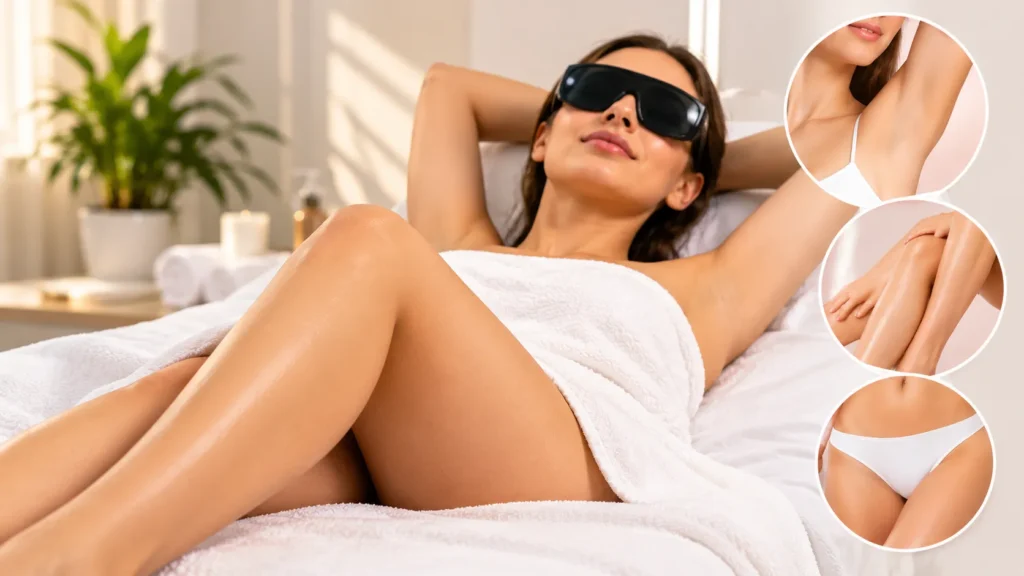
So, does laser hair removal hurt? Usually, it causes brief discomfort rather than real pain. How much you feel depends on the area, your skin and the settings used. Most people describe a quick stinging sensation with each pulse, followed by warmth in the treated area. How much it hurts depends on the area being treated, your own sensitivity and the settings the practitioner uses. At Tama Aesthetics in Wallington, the consultation is the best place to talk through what to expect for your skin and the area you want treated.
What does laser hair removal actually feel like?
Most people describe it as a series of small, quick sensations, rather than one continuous pain. The Leeds Teaching Hospitals NHS Trust describes each pulse as causing “a brief stinging sensation,” and says the area may feel hot afterwards.
The rubber-band snapping sensation
Many people compare the feeling to a rubber band snapping against the skin. It’s sharp for a moment and then fades. You may notice it more on thinner skin or in areas with dense hair.
Is the sensation constant or does it come in pulses?
It comes in pulses. The laser fires briefly, pauses, then fires again as the practitioner moves across the area. The gaps between pulses are often when people feel most comfortable. Ask your practitioner how they plan to work through the area so you know what to expect.
How long does the discomfort last?
The sensation is strongest during treatment. Afterwards, the skin often looks pink and may feel warm for a few hours. The NHS Trust notes that some patchy pinkness can last seven to ten days, so most people return to normal within about a week.
Which body part is most painful for laser hair removal?
Pain is personal, so there’s no official ranking. However, the areas people most often report as more uncomfortable tend to be those with thinner skin, more nerve endings or denser hair. Common reports include the upper lip, the bikini line and Brazilian areas, and the underarms.
Brazilian and pubic area: what should you expect?
This area is often described as one of the more uncomfortable treatment zones. The skin is thin, and the hair can be dense. Many people find the first session the most sensitive, and a practitioner can often work in short sections to make it easier.
Bikini line: is it more comfortable than Brazilian?
Usually, yes, because the treated area is smaller. A bikini line treatment covers less skin, so the session is often shorter.
Underarms: why can this area feel sensitive?
The underarm skin is thin and sensitive, and the area is often shaved or waxed, which can make the skin reactive. Most people find it manageable, but it’s worth asking your practitioner to take breaks if you need them.
Upper lip and chin: does facial laser hair removal hurt?
The upper lip is often described as one of the more sensitive areas on the face. Sessions are short, though, so many people find the discomfort brief. Tama Aesthetics lists upper lip, chin and other facial treatments, including facial laser hair removal treatments.
Chest, stomach and back: what is the sensation like?
These areas are often less sensitive than the face or bikini line, though sensitivity varies from person to person. Larger areas take longer, so breaks can help.
Arms and legs: are these areas less painful?
Many people find the legs and arms among the more comfortable areas, because the skin is thicker and the treated area is larger. Sessions tend to be longer, so the total time can feel more demanding even when each pulse is mild.
The table below gives a general guide only. Individual experiences vary, and the descriptions reflect common reports rather than measured pain scores.
| Treatment area | Commonly reported sensation | Why it can feel different |
|---|---|---|
| Upper lip, chin | Sharp and brief | Thin skin, sensitive area |
| Underarms | Stinging, can feel warm | Thin skin, often recently shaved or waxed |
| Bikini line | Stinging, varies by area | Sensitive, dense hair |
| Brazilian and Hollywood | Can be intense in parts | Dense hair, sensitive areas, longer sessions |
| Chest, stomach, back | Mild to moderate | Larger area, sensitivity varies |
| Arms, legs | Mild to moderate | Thicker skin, longer sessions |
Why does laser hair removal hurt more in certain areas?
Skin thickness and sensitivity
Thinner skin has less padding between the surface and the nerve endings, so the sensation can feel sharper. This is one reason the upper lip and bikini areas are often mentioned.
Hair thickness and density
Thick, dark hair absorbs more of the laser’s energy, which is why the treatment works well on it. That energy also creates the heat you feel. Areas with dense, coarse hair can therefore feel more intense.
Individual pain tolerance
Everyone’s pain threshold is different. Your mood, tiredness, stress levels and the time of your appointment can all affect how you experience the sensation.
Treatment settings and cooling methods
Settings such as pulse strength and duration change how the treatment feels. Some clinics use cooling methods to reduce discomfort. Ask the team at your consultation which cooling options they use and how they adjust the settings for you.
Does laser hair removal hurt more during the first session?
For many people, yes. The first session is often the most uncomfortable, because the skin hasn’t yet been treated and you don’t know what to expect.
What to expect during your first appointment
Your first appointment usually starts with a consultation, where the practitioner checks your skin and hair type and talks through the area you want treated. They may test the settings on a small patch of skin first. Tell them if anything feels too strong, because they can adjust the settings or pause.
Does discomfort change during subsequent sessions?
Many people find sessions become more comfortable over time, but this isn’t guaranteed. Your skin and hair respond differently, so talk to your practitioner about how each session feels.
How can you reduce laser hair removal pain?
Follow the clinic’s pre-treatment instructions
Your practitioner will tell you how to prepare. The Leeds Teaching Hospitals NHS Trust advises avoiding tanning for at least six weeks before a course, and avoiding plucking or waxing for eight weeks before it starts. Shaving one or two days before treatment is usually fine. Follow your clinic’s own instructions, since they may differ.
Ask about cooling methods
Ask whether your clinic uses cooling methods, and how they work. Cooling can make the sensation more comfortable, but ask the practitioner to explain their approach.
Discuss pain concerns before your appointment
Tell the practitioner what worries you. They can explain what to expect, adjust the settings and plan breaks.
Ask about numbing options
The Leeds NHS Trust notes that it offers no local anaesthetic, but that a practitioner can advise on pain relief. Ask Tama Aesthetics which options they offer before your appointment. If you’re thinking about an over-the-counter pain reliever, check with a pharmacist first.
Communicate when you need a short break
You can ask the practitioner to pause at any point. Short breaks are normal, and most practitioners would rather adjust than rush you.
Does laser hair removal hurt more than waxing?
Understanding the difference between laser and waxing sensations
Waxing removes hair from the root by pulling it out, so each pull creates a sharp sensation that fades quickly. Laser works differently. Light is absorbed by the pigment in the hair, which creates heat. The sensation is a stinging or hot feeling that comes in pulses.
Which method is more comfortable for sensitive areas?
Neither method is more comfortable for everyone. Some people find waxing harder, and others find laser harder. Your skin, hair and pain tolerance all matter. Many people try both methods before deciding, so talk to your practitioner about which option suits you.
What happens to your skin after laser hair removal?
Is mild redness or warmth normal?
Yes. The NHS Trust notes that skin usually looks pink and may swell slightly, like nettle rash, for a few hours. Mild redness can last a week or so.
How long can post-treatment discomfort last?
Most discomfort settles within a few days. Use sun protection every day, and avoid tanning, as the NHS Trust advises.
When should you contact your practitioner?
Contact your clinic if you notice blistering, unusual swelling, or redness that doesn’t settle. The NHS Trust advises contacting the clinic if blistering occurs. Changes to the skin colour can also happen, so tell your practitioner if you notice anything unusual.
Frequently asked questions about laser hair removal pain
Is laser hair removal painful for everyone?
No. Most people describe a brief stinging sensation, but experiences vary a lot.
Can I ask the practitioner to pause during treatment?
Yes. Tell your practitioner at any point, and they can take a break or adjust the settings.
Can I use numbing cream before my appointment?
Ask your practitioner before using any numbing product. They can tell you whether it’s suitable for your skin and the area you’re treating.
Does the bikini line hurt more than the legs?
Often, yes, because the skin is thinner and more sensitive. Individual experiences vary.
When should I contact the clinic about discomfort after treatment?
Contact the clinic if you have blistering, increasing pain, swelling or redness that doesn’t settle.
Considering laser hair removal at Tama Aesthetics in Wallington?
Tama Aesthetics is at 154 Stafford Road, Wallington, SM6 9BS. The clinic offers a laser hair removal consultation, which the website describes as having “no commitment, no pressure.” You can use that consultation to talk through your skin, the area you want treated and any pain concerns.
Ready to explore laser hair removal? Contact Tama Aesthetics in Wallington on 07898 169870, or email contact@tamavibes.co.uk, to discuss your options and arrange a consultation.